Research The last mile of agentic AI Modern enterprises are excited by AI agents—software bots that can plan,
Research summary
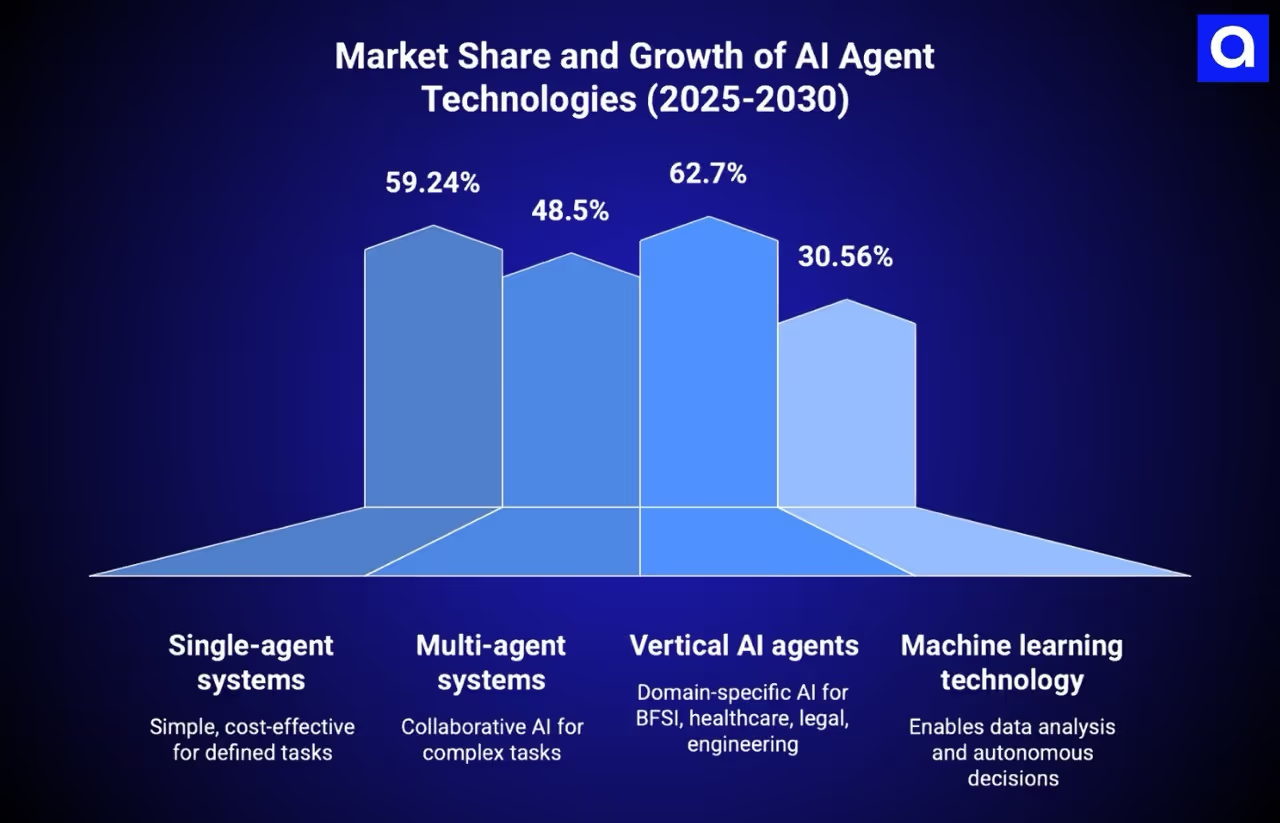
- Enterprises are rapidly adopting agentic AI (software agents that plan, reason, and act): 35% reported deployments by 2025, with another 44% planning to deploy soon [mitsloan +2].
- Despite enthusiasm, a large production gap exists: most projects stall at prototype stage and analysts predict many will be canceled due to complexity and unclear ROI; only ~11% report agents in full production (industry warnings and Gartner projections) [bcg].
- Root causes: models alone aren’t enough—successful production requires orchestration, long-term memory, security, observability/monitoring, and integration into business workflows. This report outlines the engineering stack and data-driven recommendations to close the gap.
Follow-up Questions:
1. Which specific orchestration and memory architectures are proving most effective in production?
2. What metrics and monitoring practices best detect agent drift or failure modes?
3. How should organizations evaluate ROI and prioritize agent use cases?
4. What security and governance controls are essential for agentic AI in regulated industries?
5. Can you summarize a proposed engineering stack to move from prototype to production?
Sources
Related questions
- Which specific orchestration and memory architectures are proving most effective in production?
- What metrics and monitoring practices best detect agent drift or failure modes?
- How should organizations evaluate ROI and prioritize agent use cases?
- What security and governance controls are essential for agentic AI in regulated industries?
- Can you summarize a proposed engineering stack to move from prototype to production?