ARTIFICIAL INTELLIGENCE China’s New AI Gold Rush: World Models Juro Osawa | The Information ($) "World models
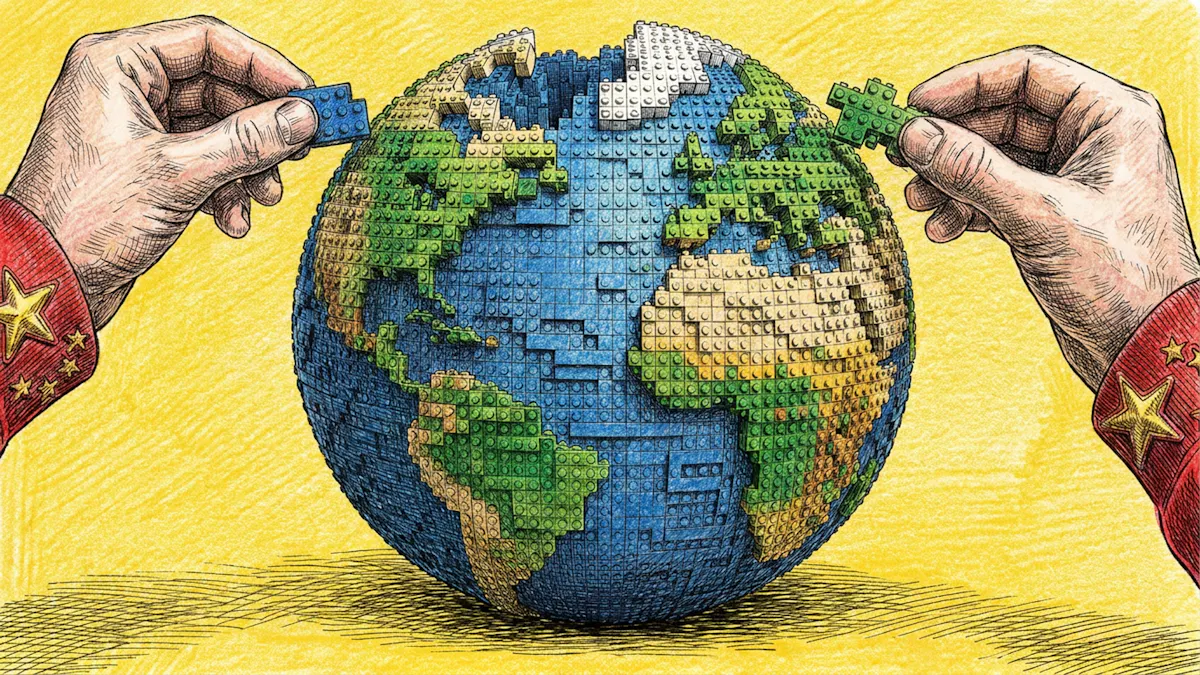
🤖 China’s World-Model Push—A Practical Lead
China’s labs are racing to build “world models” — integrated AI systems that simulate physical environments — because they map directly to strengths in manufacturing, robotics, and autonomous vehicles; the field is early with no clear global leader yet. These efforts tie research to real-world factory and robot data, giving China a deployment and data advantage. [theinformation] [scmp]
🔎 What to Know
- 🧭 Early-stage race. World models are less settled than LLMs, so many Chinese players (and global rivals) see an opening to set standards and capture downstream markets. [theinformation]
- 🏭 Industrial-data edge. China’s abundant factory and sensor data give training and simulation advantages for embodied AI and autonomous systems. [scmp]
- 🤝 Supply-chain depth. A broad, low-cost supply chain for sensors, motors, and chips accelerates hardware integration and iteration. [htx] [scmp]
- 🧪 Diverse approaches. Domestic firms label efforts differently (world foundational models, physical AI, embodied intelligence), reflecting fragmentation but also parallel experimentation. [htx]
⚙️ How It Matters
- 🚗 Direct product fit. World models feed straight into humanoids and autonomous vehicles, enabling simulation-driven control and safety testing before real-world deployment. [theinformation] [scmp]
- 🔁 Faster deployment loop. Integrating models with manufacturing and robotics shortens the iterate-deploy cycle versus purely cloud-native LLM products. [scmp]
- 🌐 Strategic implications. Whoever converges on robust world models can dominate physical-AI markets (robots, logistics, cars) with platform lock-in. [theinformation] [htx]
👉 tl;dr: China’s combination of abundant industrial data, deep supply chains, and many competing labs makes it a plausible leader in “world models” that bridge AI with real-world robots and vehicles.
Follow-up Questions:
1. Which Chinese companies are furthest along on deployed world-model-driven robots or vehicles?
2. What technical definitions separate a “world model” from current simulation or control systems?
3. How do data-privacy and export controls affect cross-border training data for these models?
4. Which startups or research labs outside China are pursuing similar integrated approaches?
5. What metrics would show a clear winner in the world-model race (sim-to-real transfer, safety, cost)?
Sources
- ByteDance, Alibaba to Launch New Models in Race for AI Supremacy in China — The Information
- China’s edge over US in AI world models: abundant data, faster deployment, executive says | South China Morning Post
- ByteDance’s Upcoming ‘World Model’; Altman’s Thoughts on the GPT-5 Fiasco, Profitability, and Going Public — The Information
- Why Humanoid Robots Are the Latest Front in America’s Tech War With China — The Information
- The War Without a Unified Name: The Domestic Tech Giants' World Model Landscape | HTX Insights
Related questions
- Which Chinese companies are furthest along on deployed world-model-driven robots or vehicles?
- What technical definitions separate a “world model” from current simulation or control systems?
- How do data-privacy and export controls affect cross-border training data for these models?
- Which startups or research labs outside China are pursuing similar integrated approaches?
- What metrics would show a clear winner in the world-model race (sim-to-real transfer, safety, cost)?